Introduction
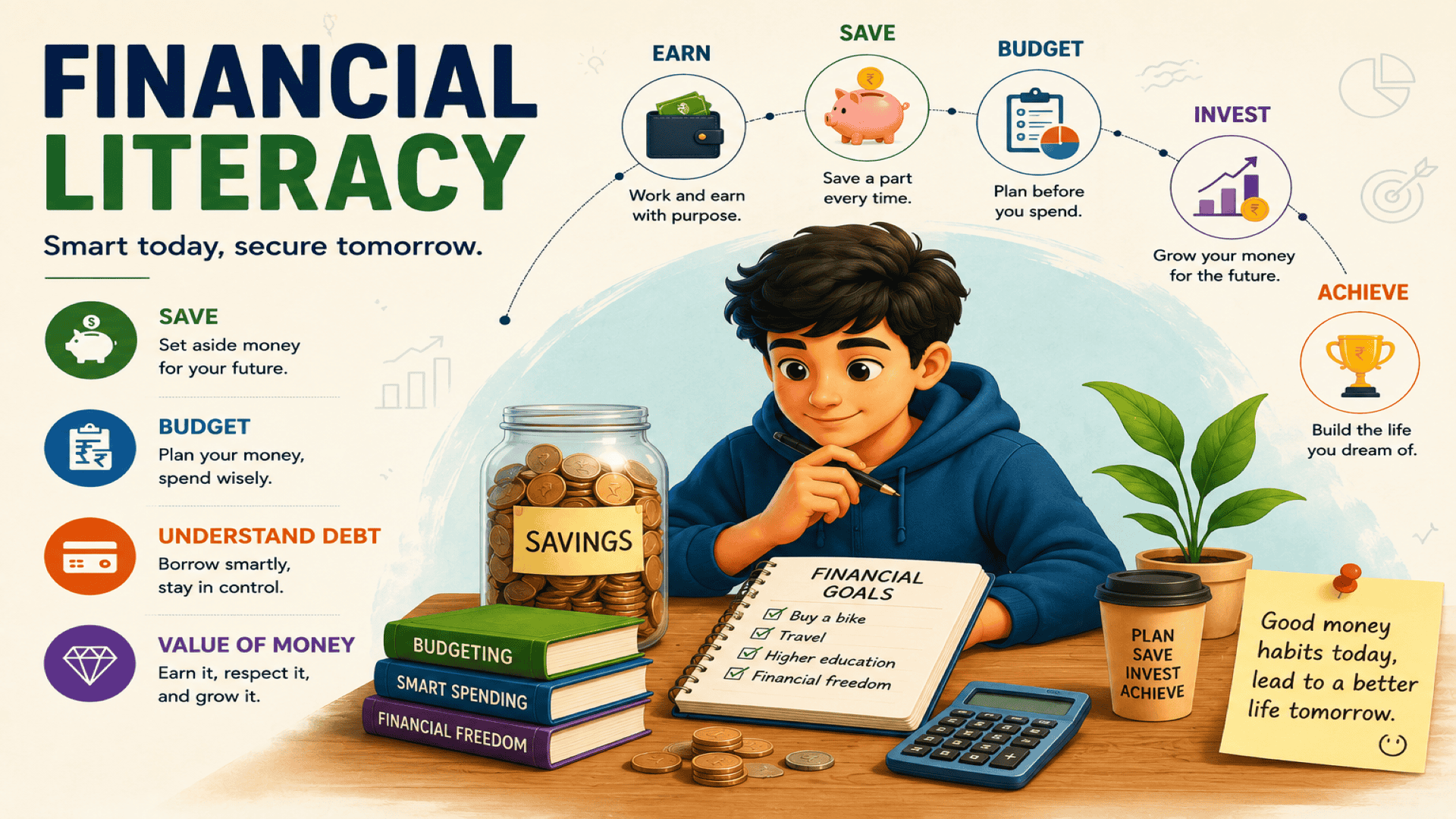
Nobody hands you a manual for money. Most of us learn algebra and history in school, but figure out saving, budgeting, and debt through trial, error, and the occasional overdraft fee. Financial literacy isn't complicated — it's just rarely taught. Here are the basics worth learning early.
1. Save Before You Spend
Most people save whatever is left over at the end of the month — which is often nothing. Flip the order: treat savings like a bill you pay yourself first, before anything else leaves your account.
The goal: Make saving automatic, not an afterthought.
A simple starting rule many financial planners use to split take-home pay:
| 50% Needs (rent, food, bills) | 30% Wants (fun, extras) | 20% Savings & debt payoff |
2. Budget Like You Mean It
A budget isn't a punishment — it's just knowing where your money goes before it goes there. Without one, spending quietly drifts to match whatever comes in.
- Track income and expenses for one month to see your real spending pattern.
- Give every rupee, dollar, or euro a job — rent, groceries, savings, fun.
- Review monthly and adjust; a budget is a living plan, not a one-time task.
Budgeting isn't about restriction — it's about control.
3. Understand Debt — Good vs Bad
Not all debt is the same. The key question is whether it builds something for the future or just funds spending you've already used up.
Often worth it: Student loans, a mortgage, or a business loan — debt that builds skills, assets, or income over time.
Usually costly: High-interest credit card balances or loans for things that lose value fast, with no plan to pay them off.
The habit that matters most: pay more than the minimum, and know your interest rate before you borrow.
4. Know the Value of Money
Money isn't just a number in an account — it's time and choices. Every purchase is really a trade-off against something else you could have done with that money.
| Money spent today | → | Money not invested | → | Growth not compounded |
Understanding compounding — how small, consistent savings grow over time — is one of the most useful things anyone can learn about money, at any age.
Key Takeaways
- Pay yourself first — automate savings.
- Track spending so your budget reflects reality.
- Separate debt that builds your future from debt that doesn't.
- Think in trade-offs, not just prices.
- Let small, consistent habits compound over time.
The Bigger Idea
Financial literacy isn't about being good with numbers. It's about making a few smart habits automatic, so your money works for your future instead of just disappearing into your present.
Your Turn
Which of these is hardest for you right now — saving consistently, sticking to a budget, managing debt, or resisting impulse spending?
Open a New Door with Ekluvya by which your child gets:
- All grades (Nursery - 12) and IIT/NEET foundation courses
- The power to choose a teacher, by topic
- Online flexibility and Netflix-like quality