Introduction
Education has always been the foundation of a nation's progress. As the world continues to evolve, the purpose of education has also changed. Today, success is no longer measured only by examination scores but by a student's ability to think critically, solve problems, communicate effectively, and adapt to new challenges.
Countries such as Finland, Germany, and the United States have transformed their education systems by focusing on creativity, practical knowledge, and student well-being. India, with its rich academic heritage and ongoing educational reforms, has the opportunity to blend these global best practices with its own strengths to create a future-ready generation.
Why Global Education Systems Matter
Every country follows a unique educational philosophy shaped by its culture, economy, and societal needs. While no single education system is perfect, each offers valuable lessons that can inspire positive change. The world's leading education systems focus on developing the whole child rather than simply preparing students for examinations. They encourage curiosity, confidence, collaboration, innovation, and lifelong learning.
Rather than comparing which country is "better," it is more meaningful to understand what makes each system successful and how those ideas can be adapted to suit Indian classrooms.
Finland: Learning Through Happiness
Finland is widely recognized for creating one of the happiest education systems in the world. Students experience less academic pressure and more opportunities to explore, question, and understand concepts deeply.
Teachers are highly respected professionals who guide rather than simply instruct. Homework is limited, classrooms are interactive, and equal learning opportunities are provided to every child. The emphasis is on developing confidence, creativity, emotional well-being, and independent thinking.
This approach proves that students learn more effectively when they enjoy the learning process rather than fear it.
Germany: Preparing Students for Real Life
Germany's education system places significant importance on practical learning and vocational education. Students are encouraged to apply classroom knowledge to real-world situations through hands-on activities, technical training, apprenticeships, and industry collaboration.
Instead of separating theory from practice, Germany combines both. This ensures students graduate with skills that are directly relevant to future careers.
The result is a workforce that is disciplined, technically skilled, and ready to contribute to society from an early stage.
United States: Encouraging Innovation and Creativity
The American education system encourages students to become innovators rather than passive learners. Project-based learning, collaborative activities, research, presentations, and technology integration help students think independently.
Students are encouraged to ask questions, express opinions, and explore multiple solutions to a problem. Rather than memorizing information, they develop critical thinking, leadership, communication, and problem-solving skills.
This environment nurtures creativity and prepares learners for an increasingly digital and innovation-driven world.
India's Strengths and Opportunities
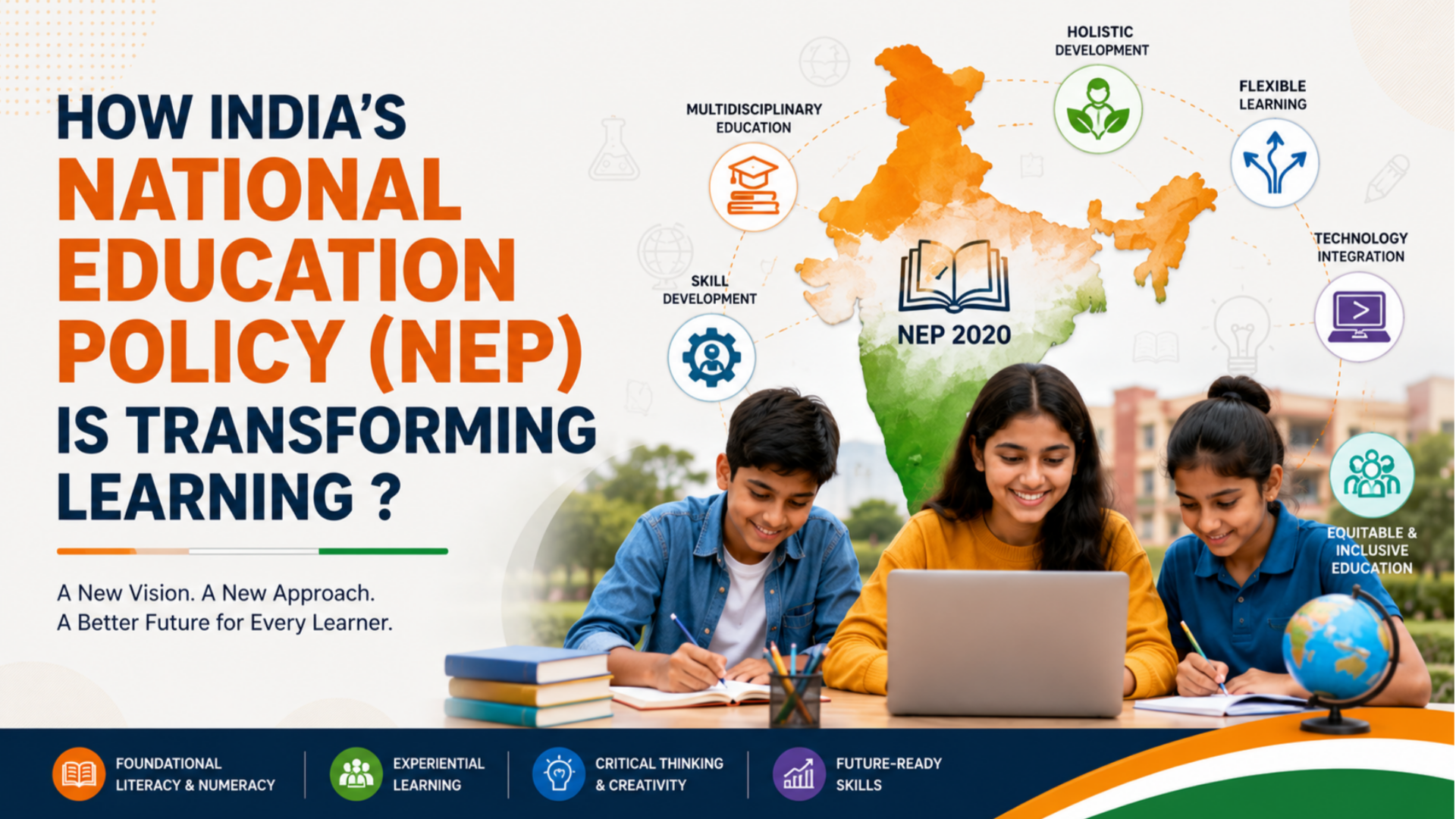
India has one of the strongest academic traditions in the world. Students consistently demonstrate excellence in mathematics, science, engineering, medicine, and technology. Recent initiatives such as the National Education Policy (NEP 2020) are shifting the focus toward experiential learning, skill development, multidisciplinary education, and digital transformation.
However, there is still an opportunity to reduce excessive dependence on rote memorization and examinations by creating classrooms that promote exploration, creativity, collaboration, and practical application.
India does not need to replace its education system—it can strengthen it by adopting successful practices from around the world while preserving its cultural values and academic excellence.
What Can India Learn from the World's Best Education Systems?
Activity-Based Learning
Learning becomes more enjoyable when students participate in experiments, storytelling, games, and interactive classroom activities instead of only listening to lectures.
Project-Based Learning
Students should regularly solve real-life problems through projects that encourage teamwork, research, creativity, and presentation skills.
Practical Skill Development
Schools can introduce coding, robotics, entrepreneurship, financial literacy, design thinking, and vocational education alongside traditional academics.
Blended Learning
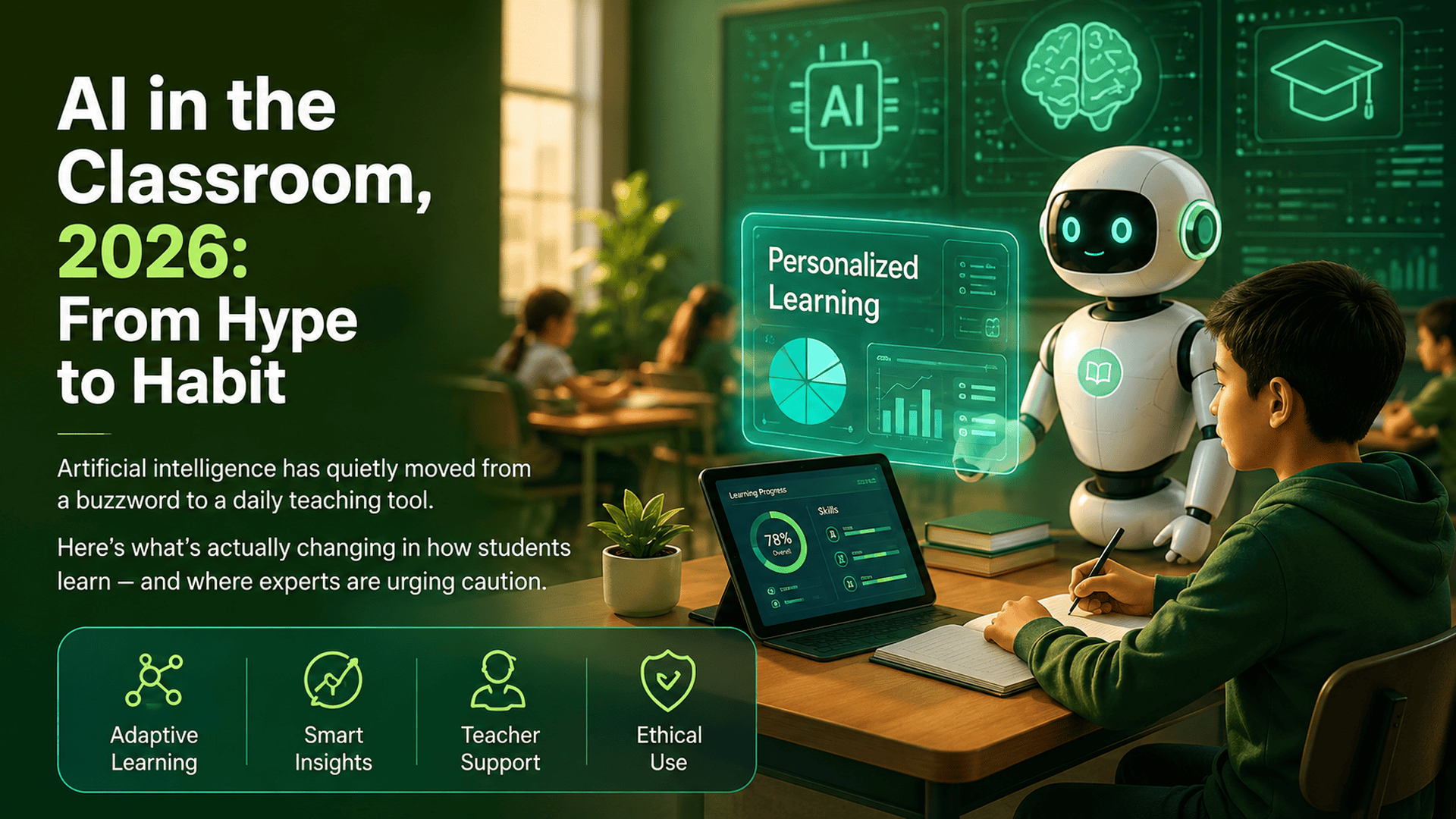
Digital platforms, AI-powered learning tools, simulations, educational videos, and smart classrooms can complement traditional teaching methods and make learning more engaging.
Personalized Learning
Every child learns differently. Adaptive learning paths allow students to progress according to their individual strengths, interests, and pace.
Life Skills and Emotional Well-being
Education should include communication, leadership, empathy, emotional intelligence, resilience, teamwork, and mental well-being to prepare students for life beyond school.
Global Exposure
International collaboration, cultural exchange, multilingual education, and global awareness help students become responsible global citizens.
Creativity, Arts, and Sports
Music, theatre, painting, dance, sports, and innovation activities develop imagination, confidence, discipline, and overall personality.
Creating Happy Classrooms
The most successful classrooms are those where students feel safe, respected, motivated, and inspired to learn.
Teachers can create such environments by encouraging curiosity, celebrating effort rather than only results, connecting lessons to real-life situations, promoting teamwork, and giving students the freedom to ask questions without fear of failure.
Technology should enhance learning rather than replace teachers. The best education systems combine human guidance with modern digital tools to provide meaningful learning experiences.
The Future of Indian Education
The classroom of tomorrow will not be defined by rows of silent students memorizing information. Instead, it will be a space where learners explore ideas, collaborate with peers, conduct experiments, build projects, solve problems, and develop solutions for real-world challenges.
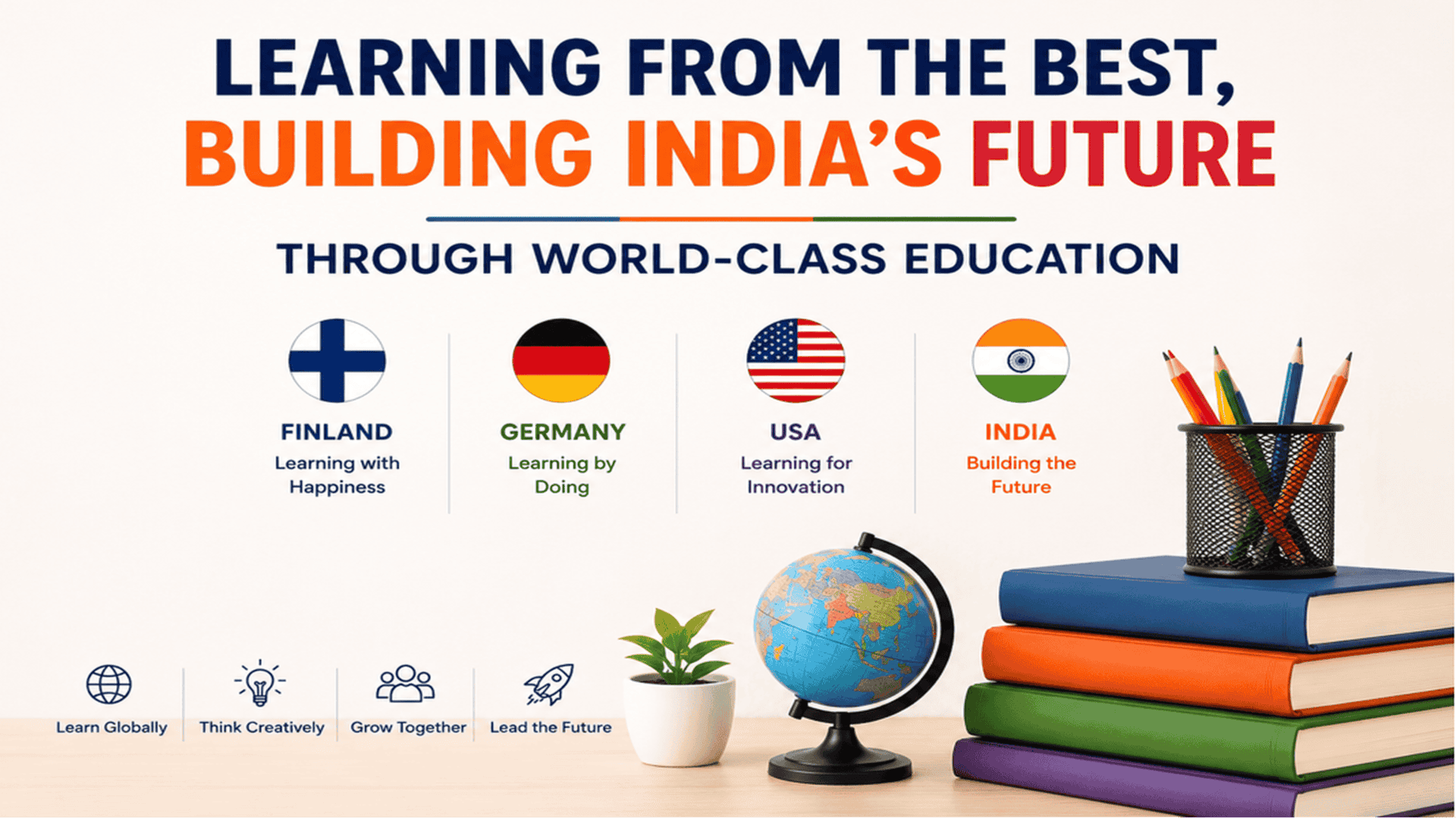
India has all the necessary ingredients to build one of the world's most effective education systems. By integrating Finland's student well-being, Germany's practical learning, America's innovation-driven mindset, and India's strong academic foundation, schools can nurture students who are knowledgeable, skilled, creative, compassionate, and ready for the future.
Conclusion
The goal of education is not merely to produce high exam scores—it is to develop thoughtful, responsible, and capable individuals who can contribute positively to society.
There is no perfect education system, but there are valuable lessons to learn from every country. By embracing global best practices while preserving India's values, culture, and educational heritage, we can create classrooms that inspire curiosity, encourage creativity, build confidence, and prepare every student for lifelong success.
The future of education is not about choosing one country's model—it is about combining the best ideas from around the world to create an education system that empowers every child to learn, grow, innovate, and lead.
Open a New Door with Ekluvya by which your child gets:
- All grades (Nursery - 12) and IIT/NEET foundation courses
- The power to choose a teacher, by topic
- Online flexibility and Netflix-like quality