Introduction
Every year, over 2.5 million students sit for JEE Main and NEET combined — chasing a few thousand seats in the institutions that will define the next decade of their lives. For as long as these exams have existed, preparation has meant the same triad: coaching institutes, textbooks, and relentless practice. What's changed in the last few years isn't the exams themselves, but how students prepare for them — and AI is at the center of that shift.
Where AI Has Already Changed the Game
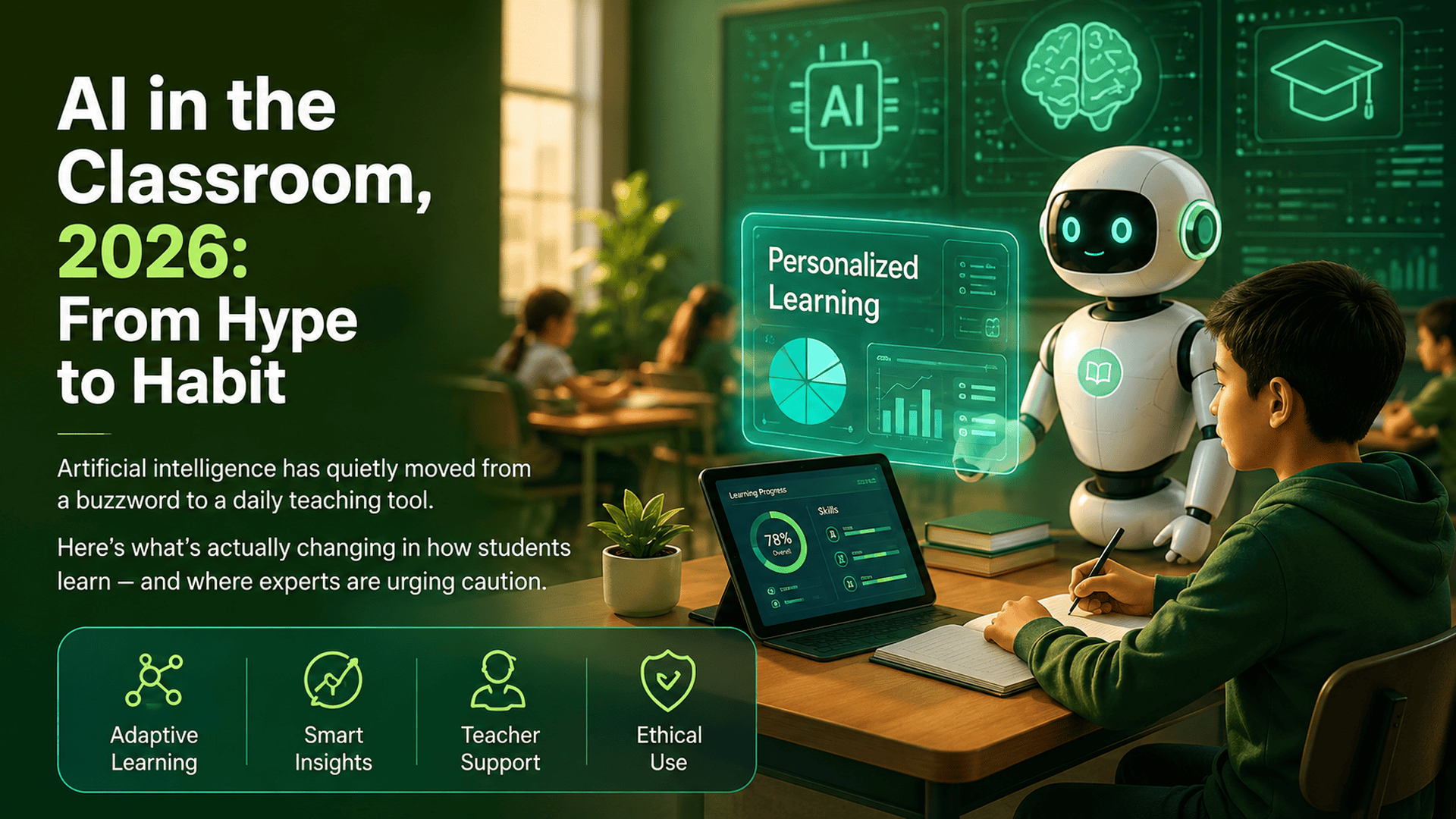
AI adoption in entrance exam prep hasn't arrived as one big disruption. It's shown up in layers:
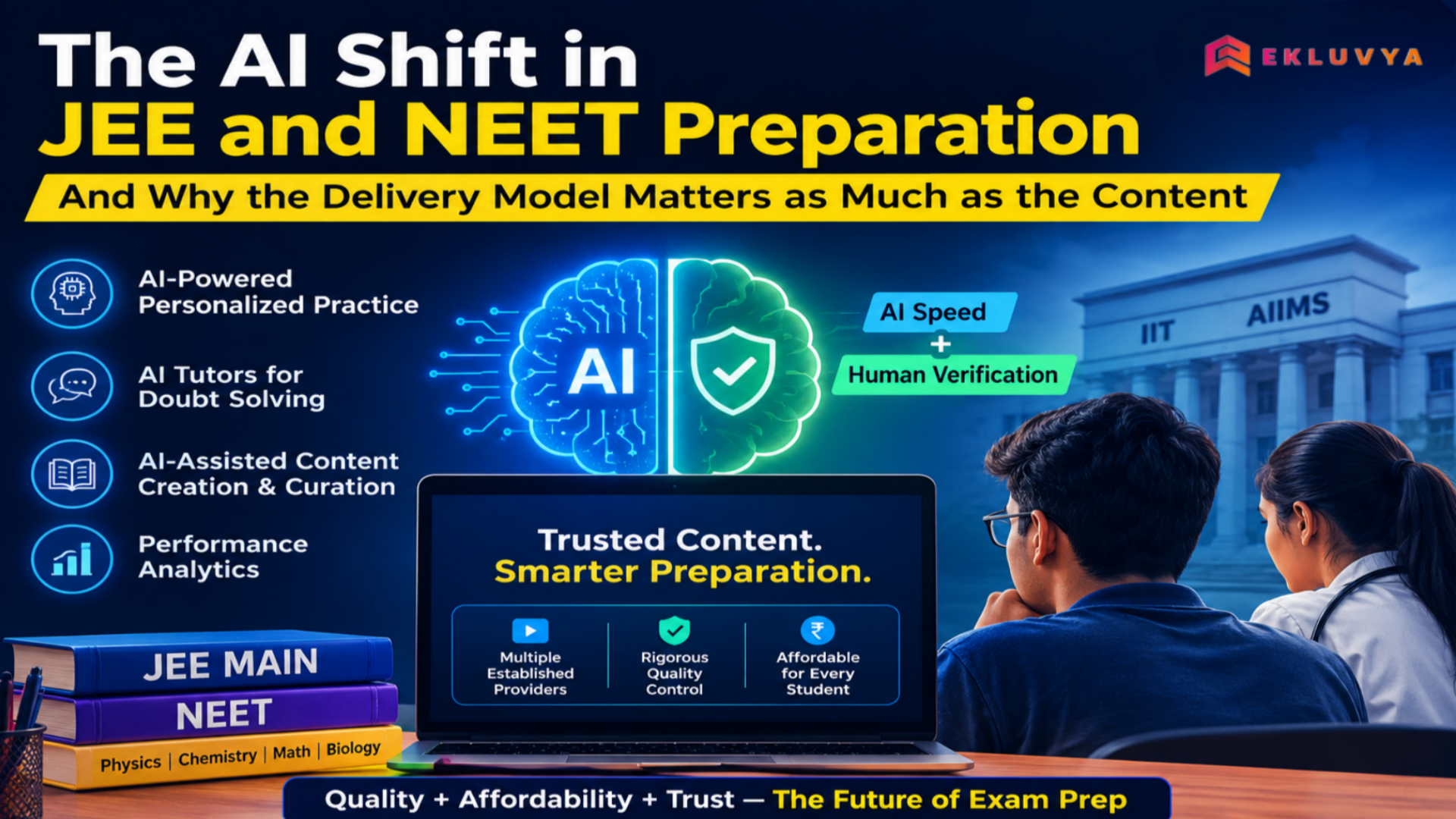
- Personalized practice — adaptive test engines that adjust question difficulty based on a student's performance, instead of handing every student the same 500-question PDF.
- Doubt-solving at scale — AI tutors that can explain a stuck physics problem at 11 PM, when no human mentor is available.
- Content generation and curation — question banks, explanations, and study material increasingly drafted with AI assistance, then refined by subject experts.
- Performance analytics — dashboards that tell a student not just their score, but where they're losing marks — silly errors, conceptual gaps, or time management.
These are genuinely useful shifts. But there's a quieter risk that comes with all of them: speed without verification. AI can draft a question paper in minutes. It cannot, on its own, guarantee that paper is syllabus-aligned, pedagogically sound, or free of the kind of subtle inaccuracy that costs a student marks in a 3-hour, no-mistakes-allowed exam. That gap — between AI-generated and AI-verified — is where a lot of edtech content quietly falls short.
The Real Bottleneck Isn't Access to Content — It's Trust in Content
Ask any JEE or NEET aspirant today and they'll tell you the same thing: there is no shortage of study material. YouTube has thousands of physics lecture videos. Telegram channels circulate PDFs of every major coaching institute's notes. The problem was never access. It's fragmentation and inconsistency — a student jumping between five different sources, each with a different pace, a different level of rigor, and no way to know which one is actually reliable.
This is the problem an OTT model for exam prep is built to solve — not by producing "yet another" set of lectures, but by aggregating trustworthy content from multiple established providers into a single, coherent platform.
Where Ekluvya Comes In
Ekluvya's approach starts from a simple premise: students shouldn't have to choose between quality and affordability, and they shouldn't have to stitch together their own preparation ecosystem from scattered sources.
As an OTT platform for entrance exam prep, Ekluvya brings together content from multiple established academic providers under one subscription — at pricing designed to be accessible at scale, not just to students who can afford premium one-on-one coaching. In a country where coaching fees can run into lakhs of rupees annually, that pricing model isn't a side detail. It's the difference between a student in a metro coaching hub and a student in a Tier-3 town getting access to the same quality of preparation.
But aggregation alone isn't a moat — anyone can host videos. What makes it defensible is the layer most platforms skip: quality control. Every piece of content that reaches a student — whether it's a physics video, a brochure explaining a course, or an AI-assisted question set — passes through a verification process that checks it against three things: factual accuracy, pedagogical soundness, and pacing appropriate for exam-day thinking, not just classroom explanation.
This is also where AI and human oversight work together rather than AI replacing the human step entirely. AI can accelerate drafting — generating first-pass question sets, for instance — but syllabus alignment and accuracy checks still require a human who understands both the exam and the subject. The result is a workflow where AI does the heavy lifting on speed, and human review does the heavy lifting on trust.
What This Means for the Next Few Years
As more edtech platforms lean into AI-generated content to scale faster and cheaper, the platforms that win student trust will likely be the ones that pair AI's speed with a visible, reliable quality layer — not the ones that skip it to move faster. For an audience preparing for exams where a single misinterpreted concept can cost a rank, "verified" will matter more than "abundant."
That's the bet an OTT model built on multiple content providers, affordable pricing, and rigorous content checkpointing is making — and it's a bet worth watching as JEE and NEET preparation continues to move online.
Have Thoughts?
Have thoughts on how AI is reshaping entrance exam prep? We'd love to hear from you — reach out to the Ekluvya team.
Open a New Door with Ekluvya by which your child gets:
- All grades (Nursery - 12) and IIT/NEET foundation courses
- The power to choose a teacher, by topic
- Online flexibility and Netflix-like quality