Synopsis
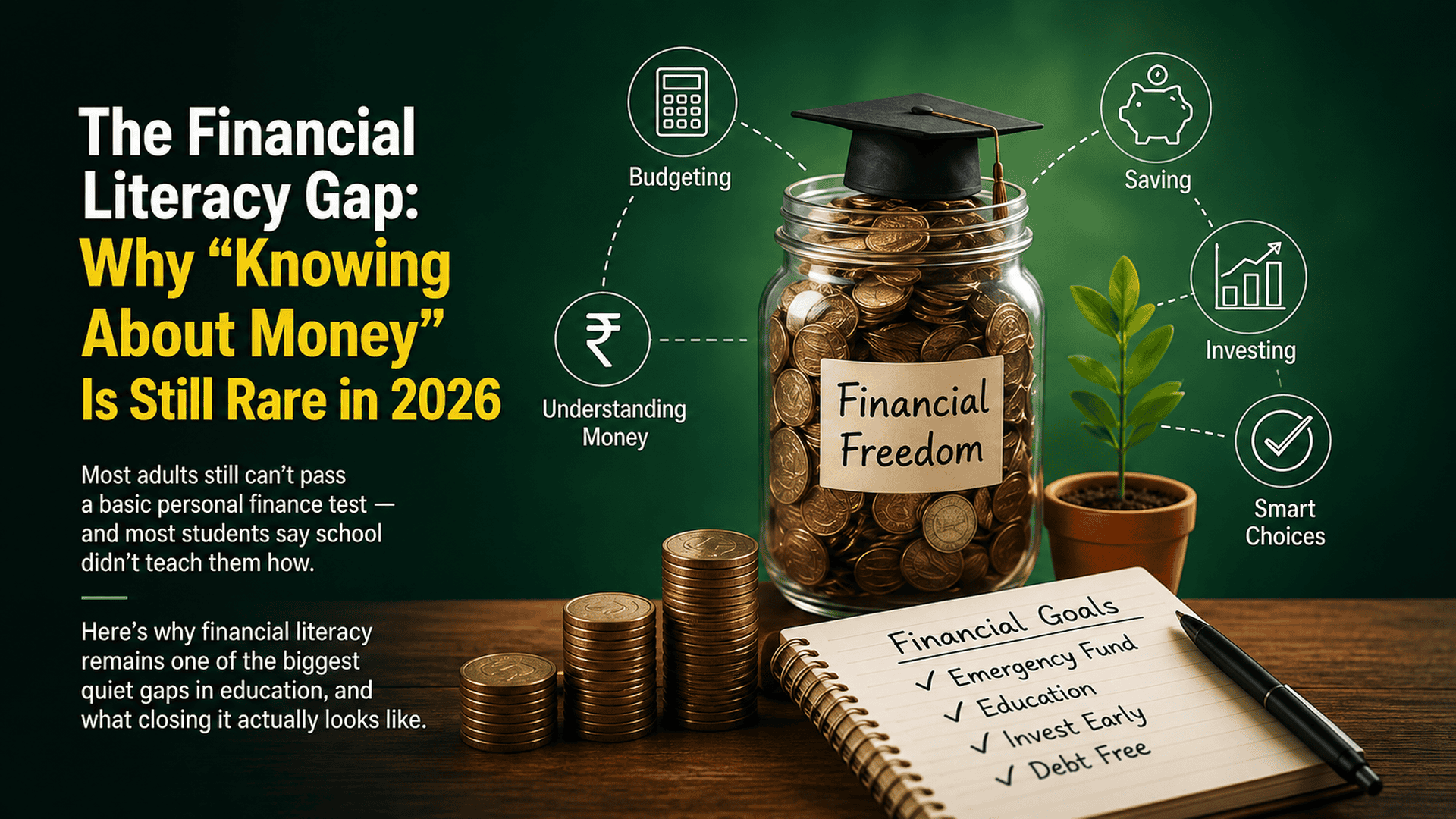
Most adults still can't pass a basic personal finance test — and most students say school didn't teach them how. Here's why financial literacy remains one of the biggest quiet gaps in education, and what closing it actually looks like.
Content Body
Ask most people if they'd like to be better with money, and the answer is almost always yes. Ask them to actually pass a basic financial literacy quiz, and the numbers tell a different story. Roughly half of adults in developed economies still can't correctly answer a majority of basic personal finance questions — covering things like compound interest, inflation, and risk — and globally, only about a third of adults are considered financially literate at all. That gap hasn't meaningfully closed over the last decade of measurement, even as the cost of getting it wrong keeps rising.
The generational picture is particularly striking. Younger adults — the demographic most exposed to buy-now-pay-later apps, crypto trading, and student debt — consistently score among the lowest of any age group on financial literacy indices, even though they're the ones making some of the biggest early financial decisions of their lives: student loans, first credit cards, first jobs, first attempts at saving or investing. Surveys of students themselves echo this: a large share say they don't think their school did enough to make them financially literate, and student loan debt is consistently cited as students' top financial fear after graduation — ahead of even job security.
The good news is that this is one of the more solvable gaps in education, and momentum is building. In the US, the number of states requiring a standalone personal finance course to graduate high school has grown roughly five-fold since 2019, and once fully implemented, a large majority of public high schoolers will be required to take one. In India, financial inclusion — access to bank accounts, credit, and digital payments — has been improving steadily, even as measured financial literacy (actually understanding how to use those tools well) still lags noticeably behind access. That gap between having a bank account and knowing how to use it wisely is exactly where structured financial education adds the most value.
What actually moves the needle isn't abstract theory — it's practical, applied knowledge: how compound interest works for and against you, how to read a loan or credit card agreement, the real difference between saving and investing, and how to build a budget that survives contact with real life. The vast majority of adults, when surveyed, say they wish they'd been taught exactly this in school, in plain language, before they had to learn it the expensive way.
For a learning platform, financial literacy content sits in a sweet spot: it's genuinely high-stakes (bad financial decisions are costly and hard to reverse), it's chronically under-taught in formal education, and it's a skill that pays for itself almost immediately once learned. It's less about becoming an expert investor and more about not being blindsided by decisions everyone eventually has to make.
Conclusion
Financial literacy is one of the few subjects almost everyone agrees is essential and almost no one gets properly taught. Closing that gap doesn't require complex investing knowledge — just clear, practical money fundamentals learned before the expensive mistakes happen, not after.
Open a New Door with Ekluvya by which your child gets:
- All grades (Nursery - 12) and IIT/NEET foundation courses
- The power to choose a teacher, by topic
- Online flexibility and Netflix-like quality