Introduction
Education has always been the engine of human progress. From the printing press to the internet, every major technological shift has reshaped how we learn. Today, Artificial Intelligence (AI), digital platforms, data analytics, and immersive technologies are sparking a new revolution—one that moves education away from rigid, one‑size‑fits‑all instruction toward a dynamic, learner‑centric ecosystem.
In this new era, education is no longer about passing exams alone; it's about nurturing creativity, critical thinking, collaboration, and lifelong adaptability. As industries evolve faster than ever, schools and universities must prepare students not only for current careers but for roles that don't yet exist. This article explores the journey from traditional classrooms to AI‑powered personalised learning, the challenges we must overcome, and the solutions that promise a brighter, more equitable future for every learner.
The Problem
Why Traditional Education Falls Short
1. Standardised, One‑Size‑Fits‑All Curricula
Every student has unique strengths, pace, and interests, yet traditional schooling forces everyone through the same content at the same speed. This leads to disengagement, learning gaps, stress, and stifled creativity.
2. Over‑Emphasis on Examinations
Success is often measured by test scores rather than understanding. Rote memorisation overshadows critical thinking, problem‑solving, and genuine curiosity—leaving learners ill‑equipped for real‑world challenges.
3. Slow Adaptation to Industry Needs
Technology advances far more quickly than curricula can be updated. Employers now demand skills in AI, data science, cybersecurity, and automation, but many graduates lack these competencies. Additionally, the digital divide—unequal access to devices and internet—threatens to widen educational inequalities, making it harder for underserved communities to benefit from technological progress.
The Solution
AI‑Powered Transformation
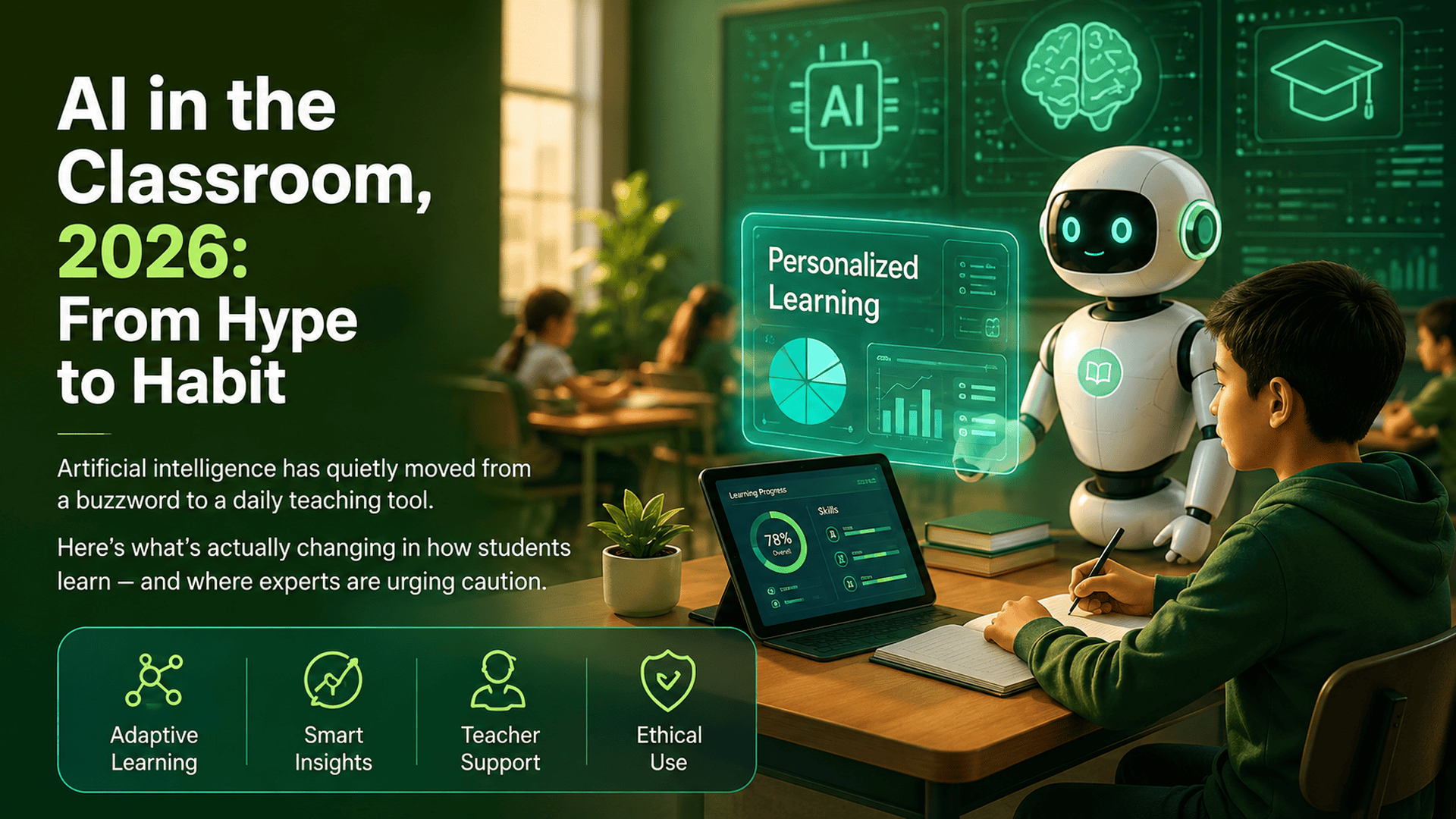
Artificial Intelligence is not here to replace teachers—it's here to empower them. By integrating AI into classrooms, we can create adaptive, engaging, and accessible learning experiences for all.
Personalised Learning Paths
AI analyses each student's performance, strengths, and weaknesses, then recommends customised content and pacing. Advanced learners receive enrichment; struggling students get extra practice and targeted support. This boosts confidence and outcomes.
Intelligent Tutoring Systems
AI‑powered virtual assistants provide 24/7 support—answering questions, offering explanations, and giving instant feedback. Students can learn at their own pace, breaking free from the constraints of school hours.
Smart Assessments
Automated grading of objective tests, quizzes, and even written assignments frees teachers from repetitive tasks. Analytics dashboards give educators real‑time insights into class progress, so they can intervene early and effectively.
Predictive Analytics
AI can spot at‑risk students before they fall behind. By monitoring attendance, engagement, and performance, schools can offer timely support, reducing dropout rates.
Hybrid Learning Models
The future is blended—combining face‑to‑face teaching with online resources, virtual labs, recorded lectures, and collaborative digital spaces. This flexibility accommodates different learning styles and life circumstances.
Immersive Experiences (VR/AR)
Virtual and augmented reality let students explore historical sites, perform virtual surgeries, or experiment in safe simulated labs. Such hands‑on experiences deepen understanding and retention.
Project‑Based Learning
Instead of passive absorption, students tackle real‑world projects, case studies, and hackathons. They learn to apply theory, work in teams, and innovate—skills that employers highly value.
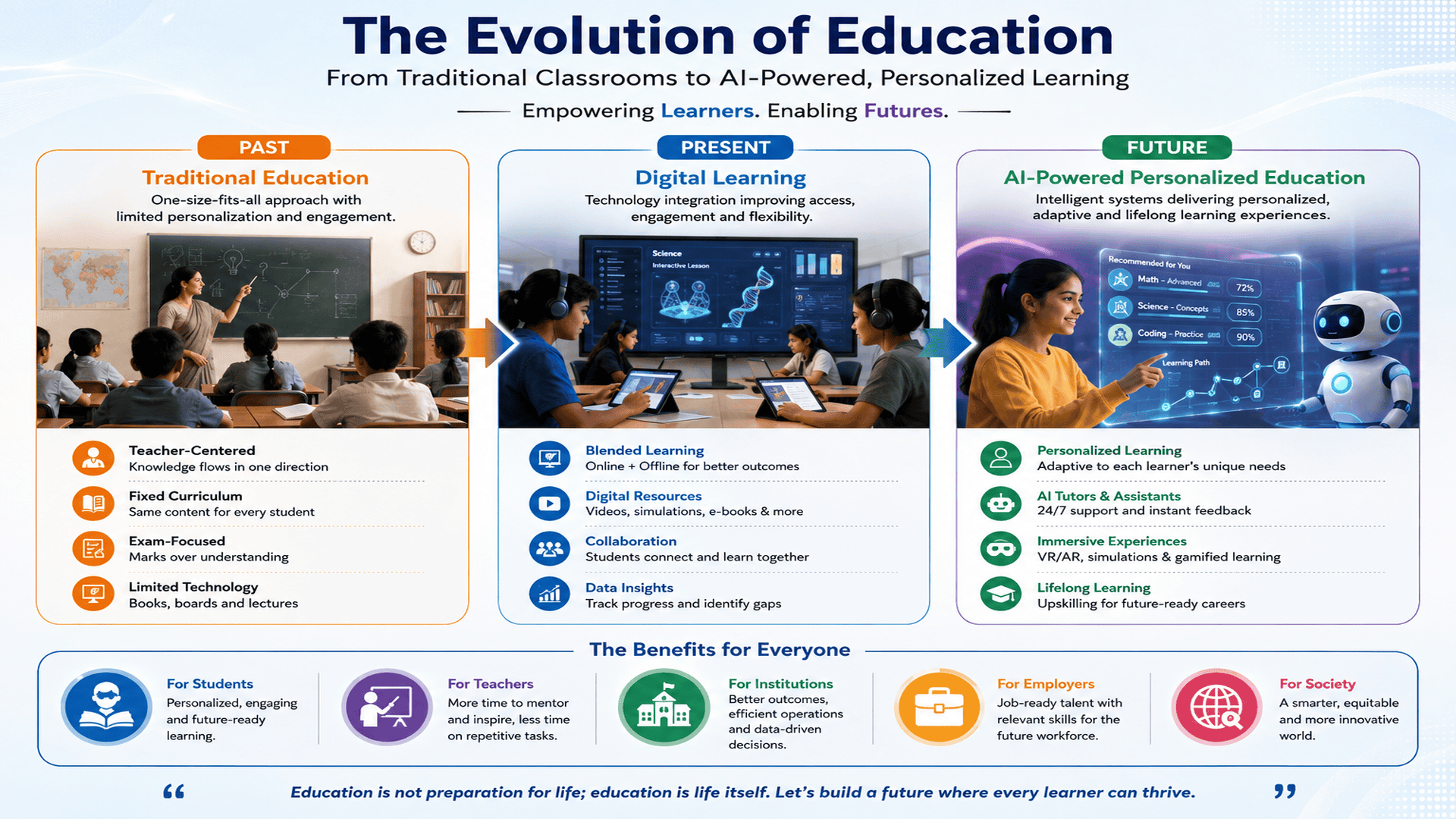
The Evolution of Education
From Traditional Classrooms to AI-Powered, Personalized Learning
- PAST (Traditional Education): Teacher-centered, fixed curriculum, exam-focused, limited technology
- PRESENT (Digital Learning): Blended learning, digital resources, collaboration, data insights
- FUTURE (AI-Powered Personalised): Adaptive learning, AI tutors, immersive experiences, lifelong upskilling
AI-Powered Learning at a Glance
- Learn: Personalised, student progress, engagement, collaboration
- Explore: Learning, accessibility, personalisation
- Innovate: Smart assessments, real-time analytics, better outcomes
- Grow: Hybrid learning, blended classrooms for AI & smart systems, intelligent tutoring, automated assessments
Key focus areas: Hybrid Learning, AI & Smart Systems, Project-Based Learning, Flexibility & Accessibility, Lifelong Learning, Immersive Learning (VR/AR), AI-Personalised Learning, Future Ready Skills
Core competencies: Critical Thinking · Creativity · Collaboration · Communication
The Benefits for Everyone
- 🎓 For Students: Personalised, engaging, future-ready
- 👩🏫 For Teachers: More time to mentor, less admin
- 🏛️ For Institutions: Better outcomes, data-driven decisions
- 🏢 For Employers: Job-ready talent with relevant skills
- 🌍 For Society: Smarter, equitable, innovative world
Conclusion
We stand at the threshold of one of the most exciting eras in educational history. AI, immersive technologies, and adaptive platforms are turning classrooms into intelligent, personalised, and inclusive learning environments. The goal is not to mechanise teaching but to augment human potential—giving educators powerful tools to help every student thrive.
To succeed, we must address persistent challenges: bridging the digital divide, safeguarding data privacy, rethinking academic integrity, and investing in teacher training. But the promise is immense. By combining empathy with technology, knowledge with skills, and innovation with equity, we can build an education system that doesn't just prepare people for tomorrow's jobs—it empowers them to shape a better future for all.
"Education is not preparation for life; education is life itself." — John Dewey ✦ Let's build a future where every learner can thrive.
Open a New Door with Ekluvya by which your child gets:
- All grades (Nursery - 12) and IIT/NEET foundation courses
- The power to choose a teacher, by topic
- Online flexibility and Netflix-like quality